When choosing foam for sofa cushions, high density material helps resist sag, maintain shape, and provide durable support for everyday use. This guide reviews five top-rated options that balance firmness, comfort, and long-term performance. Each product features engineering that targets load distribution, edge support, and resilience, making them suitable for DIY cushions, replacements, and refinishing projects.
Summary of selected products:
| Product | Brand | Density/Type | Key Benefit | Notes |
|---|---|---|---|---|
| Upholstery Foam Pad (72″ x 24″ x 1″) | Aqzuxira | Memory foam with 0.4″ memory + 0.6″ support layer | Enhanced cushioning and load distribution | Cut-to-size versatility |
| FoamTouch Upholstery Foam (2″ x 24″ x 72″) | FoamTouch | High density polyurethane foam | Solid cushioning with controlled compression | Great all-around upholstery foam |
| Spongiduits Couch Cushion Support (20″ x 20″) | Spongiduits | 40D high-density curved foam | Sag restoration and durable under-cushion support | Set of 3 for multiple spots |
| Foamy Foam High Density (3″ x 24″ x 72″) | Foamy Foam | 1.8 density, 44 ILD | Durable and firm for replacements | Wide customization options |
| Coaseb Custom Polyurethane Foam | Coaseb | Cut-to-size, density choices (medium/high) | Exact fit and DIY customization | CertiPUR-US certified |
Upholstery Foam Pad With Gel Memory
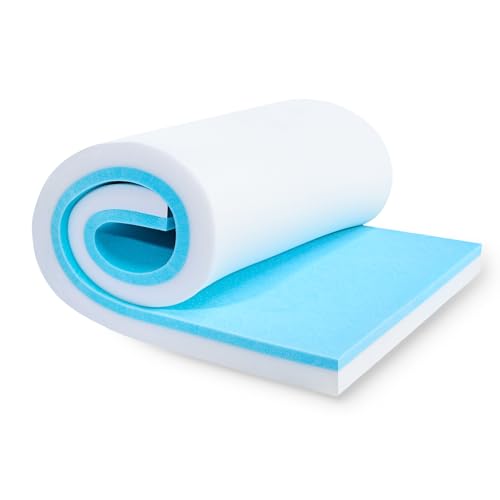
Product overview: A dual-layer design combines a 0.4-inch blue memory foam bonded to a 0.6-inch support layer. This configuration aims to deliver slow rebound, gradual pressure release, and improved load distribution for upholstered furniture. The memory foam conforms to body contours to reduce pressure points and maintain cushion shape over time. It is sold in three cut-to-fit thicknesses (1″, 2″, or 3″) and is designed to be trimmed to fit specific sofa sections. This foam is suitable for DIY replacements and sag prevention in high-use seating.
FoamTouch High-Density Upholstery Foam

Product overview: A 2-inch thick, 24-by-72 inch piece of high-density polyurethane foam intended for upholstery cushions and mattresses. It provides a compression rate around 44 pounds, delivering a balanced blend of firmness and support for seat cushions, upholstery sheets, and padding. This option is suitable for both home and light commercial upholstery projects where reliable support and straightforward customization are needed.
Spongiduits Couch Cushion Support (Set of 3)

Product overview: This set of three curved, high-density foams (40D) is designed to restore sagging cushions and dented areas. The curved arch shape provides firm under-cushion support, helping extend sofa lifespan and maintain comfort. Quick installation involves placing the supports beneath cushions to reestablish the sofa’s original contour, making it a practical solution for frequent use seating.
Foamy Foam High Density Cushion Replacement

Product overview: This high-density upholstery foam offers a 1.8 density with 44 ILD, designed for seat cushion replacements, couch cushions, and general upholstery projects. It is marketed as a versatile option, with sizes and shapes customizable to specific sofa configurations. The foam promises long-lasting support and structural resilience for routine seating use.
Coaseb Custom Polyurethane Foam Cut To Size

Product overview: Coaseb offers cut-to-size polyurethane foam with a range of densities, allowing users to specify exact length, width, and thickness. Options include 1–14 inches thick, up to 84 inches wide. The service supports precise fit for couch cushions, chairs, and DIY upholstery builds. Density choices include medium or high, with guidance on post-delivery reshaping. This option suits projects requiring precise customization and multiple shapes beyond standard rectangles.
Buying Guide: Key Considerations For Choosing High-Density Sofa Foam
Density and ILD ratings influence durability and support. Higher density foams typically resist compression and retain shape under frequent use, while ILD indicates firmness. For sofa cushions, look for densities in the range that balances support with comfort, often around 1.6–1.9 or higher, depending on the application and seating weight in your home.
Layer construction can affect feel. Memory foam layers provide contouring and pressure relief but may be slower to recover. Combining memory foam with a denser support layer can deliver ergonomic comfort and better long-term shape retention. Consider whether you want a single-density core or a layered build similar to the Gel Memory/Support configurations found in some products.
Thickness matters for sag resistance. Thicker cushions typically offer more resilience but may affect thickness constraints in sofa frames. Cut-to-size options help achieve a precise fit, reducing gaps and improving edge support. If you are repairing an existing sofa, measure cushion dimensions carefully and consider whether your project benefits from curved or non-rectangular shapes for better contouring.
Durability and certifications. Look for CertiPUR-US or similar certifications indicating low emissions and safety standards. Certifications provide assurance about content and manufacturing practices, which can influence long-term performance and peace of mind in households with children or pets.
Installation and maintenance. Some products are designed for quick under-cushion installation, while others require disassembly or careful cutting. Removable covers and washable cases add convenience for cleaning and maintenance. If you frequently rearrange furniture or replace cushions, consider options with easy cut-to-fit procedures and clear care instructions.
Budget and project scope. High-density foams vary in price based on density, thickness, and customization options. For DIY projects, a balance between cost, size, and required firmness helps maximize value. Start with a representative size to test feel and durability before purchasing large quantities for an entire sofa.
Versatility. If you plan to reuse foam in multiple furniture pieces, choose foams that can be trimmed or shaped into custom configurations, such as cylinders or nonstandard contours. This flexibility is especially valuable for DIY enthusiasts working on couches, benches, or headboards in addition to living room seating.
In summary, selecting the best high-density foam for a sofa depends on density and firmness, layered constructions for comfort, precise fit through cut-to-size options, return policies, and certifications. The products reviewed here offer a range of densities, thicknesses, and customization possibilities to address sagging cushions, edge support, and long-term durability in typical American households.