Finding reliable lift devices can reduce caregiver strain and improve safety during transfers at home or in a care facility. This guide highlights five highly regarded transfer aids designed for convenience, stability, and patient comfort. Each product below includes practical features to support safe bed-to-chair or bed-to-toilet transfers, with capacity ranges suitable for a wide range of users. Read on to compare design, grip, and ease of use across these options to help determine the best fit for your needs.
| Product | Brand | Approximate Use | Key Benefit |
|---|---|---|---|
| Vive Mobility Sit to Stand Patient Lift | Vive Mobility | Home & Facility Transfers | High weight capacity and comfortable grip |
| Vive Transfer Sling | Vive | Bed to Wheelchair/Commode | Non-slip design with multiple handles |
| Lift Assist For Elderly (WERJH) | WERJH | Standing assistance at home | Non-slip grip and easy handling |
| PPOLB Electric Chair Lift | PPOLB | Bathing, floor to chair transfers | Remote-operated with strong suction support |
| LCDOCTOR Patient Lift Transfer Chair | LCDOCTOR | Home use, wheelchair to car/bath | Versatile cushions and secure transfers |
This selection emphasizes a balance of safety features, ease of use, and transfer versatility across different home environments. Each product is suitable for individuals with limited mobility, seniors, and caregivers seeking to minimize strain during daily transfers.
Vive Mobility Sit To Stand Patient Lift

The Vive Transfer Stand-Assist is designed to help patients who cannot walk independently. It aids transitions from bed to a wheelchair, toilet, sofa, or other seating, reducing fall risk and caregiver injuries. The handrails are wrapped in soft foam for a secure grip, and the seat padding, including shin rests, adds comfort. With a robust steel frame, it supports up to 400 lbs and is compatible with doorways, while four swivel casters enable smooth movement across different flooring types.
Vive Transfer Sling With Padded Belt
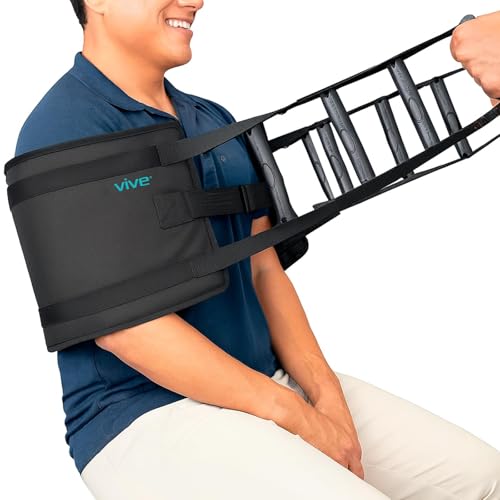
The Vive transfer sling supports safe bed-to-wheelchair or bed-to-car transfers, featuring a belted non-slip design to prevent slipping and bunching. It includes multiple padded handles for secure, comfortable grips, and a wide 9.65-inch width to accommodate different body types. The sling’s design helps minimize caregiver strain while maintaining stable transfer coordination.
WERJH Lift Assist For Elderly

The WERJH lift assist offers a safe way to help a family member or patient stand from seating. It is lightweight, easy to maneuver, and designed with a non-slip grip to reduce shoulder and wrist strain. The device supports transfers from bed, car, bathroom, or wheelchair, providing ergonomic leverage for caregivers and improved independence for users.
PPOLB Electric Chair Lift

The PPOLB Electric Chair Lift provides a fall-prevention solution for elderly users, with a 308 lb capacity and six heavy-duty suction cups to anchor the device on tile, marble, or hardwood surfaces. It uses a rechargeable remote for lift control, supports more than 50 lift cycles per charge, and features a quick-rise design for efficient transfers in daily bathing or caregiving scenarios.
LCDOCTOR Patient Lift Transfer Chair

The LCDOCTOR transfer chair emphasizes versatility with interchangeable cushions, including a plush everyday cushion and a toilet-compatible cushion. It is designed to reduce manual lifting and caregiver strain while providing stability for safe bed-to-chair or chair-to-bathroom transfers. Constructed from strong steel, it supports up to 220 lbs for dependable, long-term use.
Buying Guide: Key Purchase Considerations
- Intended use and setting: Consider whether the device will be used primarily at home, in a small clinic, or for travel between rooms. Larger stand-up lifts may offer higher weight capacity and stability, while compact sling-based systems work well in tight spaces.
- Weight capacity: Lift equipment often lists patient weight limits. Choose a model that supports at least the user’s weight plus a safety margin for caregiver use.
- Ease of use: Look for simple assembly, intuitive controls, and ergonomic grips. Remote controls or padded handles reduce fatigue during transfers.
- Portability and storage: Swivel casters, foldable designs, and lightweight frames aid maneuverability and storage in small homes.
- Safety features: Anti-tip designs, non-slip surfaces, secure belts or harnesses, and easy-stop mechanisms are critical for minimizing injuries during transfers.
- Maintenance and cleaning: Materials that withstand frequent cleaning, water resistance, and durable cushions extend device lifespan and hygiene.
- Compatibility with other devices: Some slings and chairs work with multiple lift models. Check compatibility with existing equipment for integrated use.
- Cost of ownership: Beyond initial price, consider replacement cushions, slings, and parts, as well as warranty terms and service availability.
When selecting a lift aid, prioritize safety certifications, user comfort, and the caregiver’s ability to operate the device confidently. Evaluating a few models against real-world scenarios—such as bed-to-chair transfers, standing assistance, or bath-related lifting—helps identify the best long-term solution for home care needs.