Finding a desk chair that eases hip pain while supporting good posture is essential for long work sessions. This guide highlights seating options designed to reduce pressure on the hips, support the lower back, and promote ergonomic alignment. Each option below offers unique features like memory foam cushions, adjustable lumbar support, mesh backrests, and flip-up arms to fit different workspaces and body types. Read on to discover chairs and cushions that can help minimize hip discomfort during focused work or study. A quick buying table follows the product highlights.
| Product | Brand | Key Benefit |
|---|---|---|
| TRALT Office Chair | TRALT | Ergonomic lumbar support with breathable mesh; high load capacity |
| CASASIO Home Office Desk Chair | CASASIO | All-day hip and thigh comfort with dual-direction lumbar support |
| ComfiLife Premium Gel & Memory Foam Seat Cushion | ComfiLife | Coccyx-focused cushion with gel layer for cooling and pain relief |
| Everlasting Comfort Memory Foam Seat Cushion | Everlasting Comfort | U-shaped coccyx cutout for spinal alignment and long-day relief |
| QLTPLUS Ergonomic Office Chair | QLTPLUS | All-day comfort with molded foam seat and adjustable lumbar support |
TRALT Office Chair – Ergonomic Lumbar Support

The TRALT office chair emphasizes ergonomic support for the head, back, hips, and arms. Its breathable mesh seat helps reduce heat buildup during long workdays and supports up to 330 pounds. A key feature is the recline function, allowing a tilt from 90 to 120 degrees or upright positioning, which can relieve hip pressure by changing posture. The chair’s sturdy 5-point metal base adds stability for concentrated tasks and extended sessions.
CASASIO Ergonomic Desk Chair With Lumbar Support

CASASIO’s chair prioritizes all-day hip and thigh comfort with virgin foam seating for even weight distribution. The contoured mesh back aligns with the spine, and the dual-direction lumbar cushion enables precise lower-back customization. A 3D headrest supports neck alignment for extended reading or screen time. This combination aims to reduce fatigue and hip pressure during long work sessions, while the flip-up armrests save space when needed.
ComfiLife Gel Memory Foam Seat Cushion

This cushion adds a dedicated ergonomic solution for hip and tailbone comfort. Its premium gel-memory foam delivers cooling and support, with a non-slip bottom to stay in place on office chairs. The cushion’s U-shaped design promotes healthy spine alignment and alleviates pressure on the tailbone, which can help reduce hip discomfort over long hours in a chair. It’s portable and suitable for office, car, and travel use.
Everlasting Comfort Memory Foam Seat Cushion
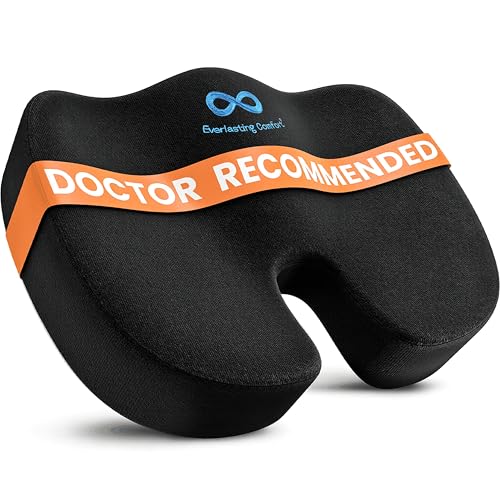
The Everlasting Comfort cushion focuses on coccyx relief with a memory foam core and a U-shaped cutout to support proper spinal alignment. Its design targets lower back comfort and overall seating ergonomics, which can help reduce hip soreness during long work periods. The cushion is suitable for office chairs or car seats and is designed for extended durability and easy cleaning.
QLTPLUS Ergonomic Office Chair

QLTPLUS presents an ergonomic setup with a molded foam seat and adjustable padded lumbar support. It accommodates long hours with a broad weight capacity and a tilt range that supports dynamic movement, reducing hip pressure by promoting varied seating postures. Flip-up arms contribute to space efficiency, allowing the chair to fit neatly under a desk when needed.
Buying Guide: Key Purchase Considerations
When choosing a chair or cushion to ease hip pain, consider the following:
- Lumbar support: Look for adjustable lumbar cushions or backrests that let you tailor lower-back support to your body’s curvature. This helps align the pelvis and reduces hip strain.
- Seat depth and width: A seat with ample depth accommodates leg length without compressing the thighs, which can aggravate hip pain. Wider seats enable comfortable repositioning.
- Cushion material and density: Memory foam and gel-infused foams distribute pressure evenly. A coccyx cutout or U-shape helps relieve tailbone and hip pressure during extended sitting.
- Seat angle and recline: A chair with a controlled recline range allows you to shift postures. Alternating between upright and reclined positions can alleviate hip tension.
- Armrests: Flip-up or adjustable arms reduce shoulder and neck strain and allow closer proximity to the desk, minimizing awkward hip twists during entry and exit.
- Durability and load capacity: A sturdy base and frame prevent wobble and fatigue during long workdays. Check weight ratings to ensure suitability for your body type.
- Portability and maintenance: Removable covers or machine-washable cushions simplify cleaning, an important factor if you sit for many hours daily.
For users with chronic hip or lower-back pain, combining a supportive chair with a pressure-relieving cushion can be especially effective. Consider testing a chair with adjustable lumbar support and a compatible seat cushion to determine the best combination for your desk setup.