For families seeking modern bunk beds that balance safety, durability, and design, this guide highlights five top picks. Each option emphasizes solid construction, non-toxic finishes, and practical features such as guardrails and easy assembly. Below you’ll find brief product snapshots and detailed sections to help you compare styles, materials, and capacity for kids’ rooms.
Buying Snapshot
- Max & Lily Fundamental Twin Low Bunk Bed — White
- Max & Lily Fundamental Twin Low Bunk Bed — Pecan
- Max & Lily Fundamental Twin Low Bunk Bed — Natural
- Max & Lily Bunk Bed Twin Over Twin — White
- LIKIMIO Bunk Bed Twin Over Twin — White
style=”display:none;”>Product summary table: The selected bunk beds below share low-profile or twin-over-twin configurations, solid wood or metal frames, up to 400 lb weight capacity per bed, and guardrails of at least 14 inches for safety. All are designed to maximize room space and ease assembly for families with kids.
Max & Lily Fundamental Twin Low Bunk Bed — White

The Fundamental Twin Low Bunk Bed uses a streamlined design with fewer headboards, enabling easier entry from all sides. Crafted with solid wood and non-toxic finishes, this bunk bed emphasizes safety with 14-inch guardrails and a sturdy build designed to support up to 400 lbs per bed. Metal-on-metal bolt connections and reinforced slats contribute to long-term stability, making it a practical choice for growing kids sharing a room.
Max & Lily Fundamental Twin Low Bunk Bed — Pecan

This variation maintains the core features of the Fundamental line: solid wood with non-toxic finishes, low-profile design for easy access, 14-inch guardrails for security, and a robust weight rating of up to 400 lbs per bed. The pecan finish offers a warm, natural aesthetic that complements modern and rustic bedrooms alike, while the secure slat system and metal connections provide dependable support.
Max & Lily Fundamental Twin Low Bunk Bed — Natural

The Natural variant preserves the same safety-first design: clean, non-toxic finishes on solid wood, 14-inch guardrails, and a low-entry bottom bed for ease of access. With a sturdy slat system and metal-on-metal bolt connections, this bunk bed is designed to endure daily use and provide reliable sleep space for two children sharing a room.
Max & Lily Bunk Bed Twin Over Twin — White
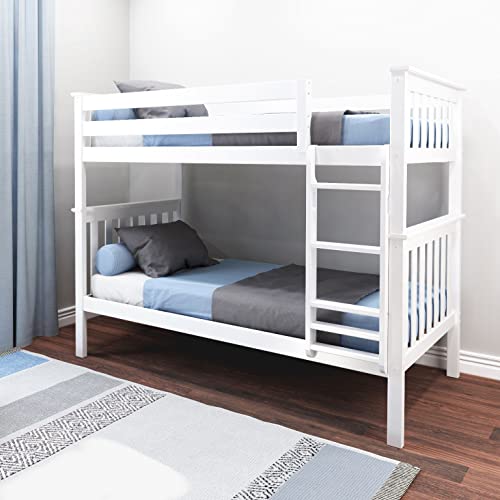
This twin-over-twin bunk bed offers a vertical space-saving solution with 14-inch guardrails and a strong wooden frame. The design emphasizes durability, with heavy-duty slats and a metal support bar, ensuring stability for up to 400 lbs per sleeping surface. Easy assembly and included hardware make setup straightforward for families seeking a practical, modern look.
LIKIMIO Bunk Bed Twin Over Twin — White

LIKIMIO’s bunk bed features a space-saving twin-over-twin configuration with a sturdy metal frame and guardrails designed for safety. It’s positioned as a practical dormitory or bedroom option, emphasizing durable construction, secure ladder access, and a generous 400 lbs per sleeping surface capacity. The setup is designed for efficient assembly and reliable daily use in shared rooms.
Buying Guide: Key Considerations For Modern Kids’ Bunk Beds
When selecting the best bunk bed for a child’s room, consider the following factors to balance safety, style, and practicality:
- Safety features: Guardrails height, secure ladders, and solid slats reduce the risk of falls and provide stable sleep surfaces. Look for 14-inch or higher guardrails where possible.
- Material and finishes: Solid wood with non-toxic, low-VOC finishes is preferable for kids. Metal frames can offer enhanced durability but may weigh more and impact aesthetics.
- Weight capacity: Ensure the bed can safely support the intended sleepers, often up to 400 lbs per sleeping surface for many modern bunk beds.
- Space and layout: Consider room dimensions to decide between low-profile, twin-over-twin, or loft-style designs. A low bunk makes entry easier for younger children, while twin-over-twin maximizes vertical space.
- Assembly and maintenance: Look for bunk beds that include clear instructions and hardware. Slat systems should be robust, with bolt connections that secure components firmly.
- Design harmony: Finish and style should complement the child’s room decor, from neutral woods to white or painted frames for a contemporary look.
- Longevity and adaptability: Some bunk beds convert to two separate twin beds or include built-in storage, which can extend usability as children grow.
Additional Considerations: Depth, Safety, And Future Use
In addition to core features, consider guardrail height, ladder accessibility, and potential for conversion or added storage. Low bunk designs benefit younger children who may outgrow climbing challenges, while twin-over-twin models offer flexibility for siblings or sleepovers. When possible, inspect the hardware and ensure compatibility with standard bedding and mattress sizes to avoid misfits.