Choosing the right side table or rolling cart for a PC tower can improve airflow, accessibility, and desk space. The following selections focus on height-adjustable designs, mobility, and sturdy construction to accommodate ATX towers, printers, and accessories. Each option below emphasizes stability, airflow, and under-desk convenience for American home offices and gaming setups.
| Product | Key Feature |
|---|---|
| EUREKA ERGONOMIC PC Stand (Black) | 6-gear height adjust; 2-tier design; mobile with brakes |
| Besiost Computer Tower Stand with Power Strips | 4 height levels; built-in power strip; locking wheels |
| EUREKA ERGONOMIC PC Stand (Walnut) | Height adjustable; pegboard back; 2-tier with mousepad |
| Akxomel 2 Tier Computer Tower Stand | Under-desk fit; charging station; C-shaped side table |
| Hovadova Height Adjustable Tower Stand | Dual outlets; USB ports; under-desk mobility |
The following sections spotlight five selected options that balance height versatility, mobility, and storage capacity. Each entry provides a concise look at utility, fit, and typical use scenarios to help you compare at a glance.
EUREKA ERGONOMIC Pc Stand With 2-Tier Design

This 2-tier mobile cart is designed for ATX cases and printers, featuring a height range from 23 1/4″ to 33 1/4″ through six gear steps. The bottom shelf accommodates a PC tower while the top shelf can hold a printer, plants, or documents. A pegboard on the back helps organize power strips and cables. Included mousepad adds ergonomic comfort for extended use. Four 360-degree wheels with brakes provide mobility and stability, protecting floors and reducing indentation. Ideal for a compact home office or dorm space where heat dissipation and airflow around the tower matter.
Besiost Tower Stand With Power Strips

This 4-level, manually adjustable stand lets you pick between several heights to match desk configurations and under-desk clearance. The design elevates the PC tower to improve airflow and reduce dust, with rolling wheels that lock for stability. Its under-desk positioning helps save desk space and creates room for a keyboard, mouse, or other peripherals. The wheels are designed for smooth movement on hard floors and carpet, making it a flexible option for multi-use rooms or shared workspaces.
EUREKA ERGONOMIC Walnut 2-Tier Stand

Designed for versatility, this height-adjustable cart supports most PC towers, including full-size ATX units. The 2-tier layout allocates the tower on the lower shelf and printers, small PCs, or office accessories on the top shelf. A back pegboard helps manage cables and power strips, while a built-in mousepad adds ergonomic comfort. Four 360-degree wheels with brakes offer stable, smooth movement across carpet and hard floors, making it adaptable for living rooms or bedrooms where a bed or sofa workspace is used.
Akxomel 2 Tier Tower Stand With Charging Station

This rolling PC stand combines a 2-tier layout with a built-in charging station, including USB ports to power devices such as phones and tablets. The 11.8″ D x 16.5″ W footprint fits under most desks, while the top surface provides extra room for office supplies. A C-shaped side table design adds versatility, allowing the unit to slide under seating to hold snacks, books, or a laptop. Four smooth, lockable casters enable easy repositioning and secure placement during work sessions.
Hovadova Height Adjustable Tower Stand With Locks
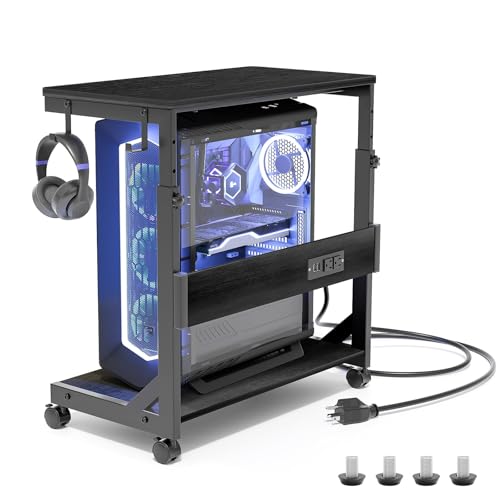
This under-desk mobile CPU holder cart features a height range from 23.23″ to 33.27″ to optimize airflow and heat dissipation for ATX towers. The stand includes dual outlets and USB charging ports, enabling a compact charging station for devices near your workspace. Four 360-degree wheels with brakes ensure controlled movement on carpeted floors and provide a stable base when locked in place. It fits most PC towers and doubles as a side table for light office tasks and lamp power needs.
TooCust Computer Tower Stand With Multi-Tier Layout

Note: TooCust offers a 3-tier design with an adjustable middle shelf to accommodate a printer on the top shelf while creating space for media or paper on the middle tier. The bottom shelf securely holds a PC tower, and side shelves help prevent the tower from tipping. The height adjustment supports various tower sizes, including mid- to full-tower models, and the unit is designed for under-desk or next-to-desk placement to optimize workspace ergonomics and cable management.
Buying Guide: Key Purchase Considerations
- Height range and adjustability: A flexible height range (roughly 23″ to 33″) helps place the tower to maximize airflow away from the desk and top-shelf devices.
- Storage and layout: Two- or three-tier designs work well for towers plus printers, speakers, or office supplies. Consider pegboards or additional shelves for cable management.
- Mobility and stability: Lockable wheels or casters protect floors and prevent unwanted movement when typing or lifting, especially on carpets.
- Heat and airflow: Elevating the tower from the floor improves intake airflow and reduces dust buildup, helping maintain component longevity.
- Power access: Built-in USB ports or power strips reduce cable clutter and provide convenient charging for peripherals without reaching for wall outlets.
- Desk compatibility: Check under-desk clearance and the stand’s footprint to ensure it fits beside or under your primary workspace without obstructing legroom.
- Material and build: Steel frames with reinforced shelves offer durability for heavier ATX cases; look for powder coating to resist scratches and wear.
- Assembly and warranty: Simple assembly with included hardware saves time; verify warranty terms and customer support quality for long-term use.
- Versatility: Some stands double as side tables or laptop desks, expanding their utility beyond PC towers for streaming, gaming, or reading.
- Maintenance: Choose designs with easy-to-clean surfaces and minimal crevices where dust collects to simplify upkeep.
All provided options emphasize safe handling of computer towers while freeing desk space and enabling flexible positioning. When selecting, weigh the tower size, desk height, and room layout to maximize airflow, accessibility, and overall ergonomics for a modern American home office or gaming setup.