Finding sturdy, wood-made cubbies for a classroom helps keep belongings organized while withstanding daily use by kids. The following five wooden cubby systems are well suited for schools, daycares, libraries, and home classrooms. This guide highlights design, storage capacity, safety features, mobility, and ease of maintenance to help administrators and teachers pick the right option. Below is a quick summary of the chosen products to compare at a glance.
| Product | Key Benefit | Storage Capacity | Mobility / Safety |
|---|---|---|---|
| Garvee 5-Section Classroom Coat Locker | Ample storage with hooks and cubbies | Five cubbies, ten hooks | Anti-tip kit for stability |
| RRI Goods 5 Section Montessori Locker | Open access design for easy visibility | Two small cubbies, double-sided hooks | Sturdy wood with natural finish |
| Happybuy 20-Section School Storage Locker | Large grid-based storage | 20 grids | 4 casters for mobility |
| Kikihouse 5-Section Classroom Locker | Clear labeling opportunities with hooks | Five sections, ten hooks, ten compartments | Sturdy construction |
| ECR4Kids 20 Cubby Mobile Tray Storage Cabinet | Mobile cabinet for quick rearrangement | 20 cubbies | Mobile with castors |
In the following sections, each product is examined for construction quality, organizational capacity, and practical use in classroom settings. The information is drawn from product features and common classroom needs to help educators evaluate the best fit for their space and budget.
Garvee 5-Section Classroom Coat Locker

The Garvee unit provides five open storage areas, ten cubbies, and five double-side coat hooks, creating ample space for jackets, lunches, and supplies in classrooms, daycares, or homes. Its wood finish is described as sturdy and stylish, with a clear lacquer that highlights natural grain while resisting wear. A heavy-duty Furniture Anti-Tip Kit is included to prevent tip-overs when installed per instructions, addressing safety in busy environments where children and adults share the space.
Key features include: five cubbies, ten hooks, and a practical design that keeps items accessible for students. The anti-tip component is a notable safety addition for classrooms, reducing the risk of furniture-related accidents during routine activities and transitions. The finish aims to balance aesthetics with durability, providing a long-lasting solution for high-traffic areas.
RRI Goods 5 Section Montessori Locker

The RRI Goods model emphasizes ample storage with dual double-sided hooks and two small cubbies positioned above and below to hold lunchboxes, shoes, hats, and other items. Its usage spans offices, schools, daycares, and home classrooms, making it a versatile option for various environments. The open access design supports easy visibility and retrieval, while a natural finish integrates well with most room decors. Its simple, sturdy construction aims to sustain daily use in active spaces.
Design notes include the practical hook arrangement and multiple storage zones, enabling students to manage personal belongings effectively. The layout promotes responsibility by giving each student a dedicated space, and the natural finish helps blend with existing classroom furniture for a cohesive look.
Happybuy 20-Section School Storage Locker
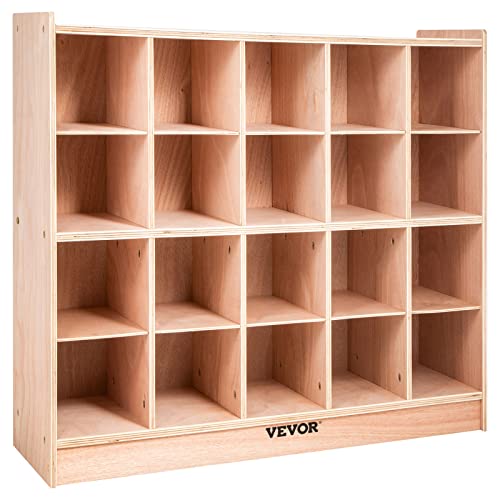
The Happybuy cabinet offers 20 grids with a single large footprint and a durable plywood build. Each grid measures 9×6.3 inches, maximizing the amount of items that can be stored per student or group. The unit includes four quiet casters for mobility, rounded corners to prevent injuries, and a bottom clearance design to guard against moisture and wear. The finish highlights the wood texture, providing a stylish, modern look suitable for busy classrooms, libraries, gyms, or homes.
Strengths include high capacity storage in a compact footprint and easy mobility. The caster system supports frequent reconfiguration of spaces for group work or activity stations, while the rounded edges and smooth surface add an element of safety for younger users.
Kikihouse 5-Section Classroom Locker

The Kikihouse model combines five open coat storage areas with ten hooks and ten compartments, plus a raised bottom design to accommodate boots and larger items. The structure is described as sturdy and beautiful, featuring thickened planks and an acrylic name tag design for easy differentiation of students’ storage spaces. This setup encourages personal organization and accountability as students learn to manage their belongings within clearly defined compartments.
Notable attributes include explicit labeling potential with name tags, robust construction, and a layout that centralizes belongings. The raised bottom helps with boot storage, which can be advantageous in regions with colder seasons or for students who routinely wear outerwear and footwear to class.
ECR4Kids 20 Cubby Mobile Tray Storage Cabinet

The ECR4Kids 20 Cubby Cabinet is designed for mobility and versatility. It serves as a central storage hub for arts and crafts, STEAM activities, lunch bags, shoes, and personal belongings. The cabinet’s design emphasizes easy reach and self-help for children, helping them develop organizational skills. A durable finish highlights the natural wood grain, ensuring each unit remains visually appealing amid daily classroom use. The mobile aspect allows teachers to reorganize spaces quickly for activities and lessons.
Key points include a 20-cubby layout, a focus on accessible design for young students, and a finish intended to stand up to frequent handling and wear. The cabinet supports both independent use and collaborative tasks by providing clearly defined storage spaces that kids can navigate autonomously.
Buying Guide: Key Purchase Considerations And Comparisons
Choosing the right wooden cubby system for a classroom involves balancing capacity, safety, mobility, and maintenance. Consider the following factors to determine the best fit for your space:
- Capacity and layout: Decide how many students you serve and whether you need individual cubbies, double-sided hooks, or a combination of both. Larger grids may be ideal for art rooms or group activity areas, while smaller systems suit hallways or entryways.
- Material and finish: Look for plywood or solid wood with a durable finish that resists scuffs, spills, and daily use. A clear lacquer or protective seal helps maintain appearance and longevity in high-traffic environments.
- Safety features: Anti-tip kits, rounded corners, and smooth edges reduce the risk of injury. Consider whether the cabinet has raised bottoms or boot storage that minimizes moisture intrusion and enhances stability.
- Mobility and placement: Casters or wheels enable flexible room layouts for daily routines and classroom rotations. Ensure locking casters or sturdy fixtures to prevent unwanted movement during use.
- Labeling and organization: Units with space for name tags or clear labeling help students take ownership of their area. Open access designs improve item visibility and retrieval for young learners.
- Maintenance and cleaning: Favor surfaces that are easy to wipe clean and resistant to stains and scratches. Simple assembly and occasional re-tightening of hardware help maintain long-term usability.
- Budget and scalability: Consider whether a unit can be easily expanded or reconfigured to accommodate future class sizes or changes in curriculum.
All five selected options balance storage capacity, child-friendly design, and classroom practicality. For environments prioritizing mobility, models with casters—such as the Happybuy and ECR4Kids cabinets—offer quick reconfiguration. If labeling and clear space separation are essential, Kikihouse and Garvee provide structured compartments and hooks that support organized routines. The RRI Goods unit emphasizes visibility and accessibility with open access design, which can simplify daily transitions for young students.